A reliable office cleaning checklist Australia businesses can follow day to day makes a noticeable difference to how a workplace looks, feels and functions. Clean surfaces, tidy common areas and a clear cleaning routine all contribute to a healthier environment for staff and visitors alike. This guide sets out the practical tasks worth building into a daily, weekly and monthly routine, along with the hygiene and compliance factors that Australian workplaces should keep in mind.
Offices see a steady flow of people, shared equipment and communal spaces throughout the working week. Without a structured approach, dust, clutter and germs build up quickly, particularly around high-touch surfaces such as door handles, keyboards and shared kitchen appliances. A written checklist removes the guesswork from cleaning duties, whether the work is handled internally by staff or outsourced to a professional cleaning service.
Beyond appearance, workplace hygiene has a direct link to staff wellbeing. Regular cleaning reduces the spread of common illnesses, supports concentration, and helps businesses across Gold Coast and beyond present a professional image to clients and visitors who walk through the door. A checklist also creates accountability. When tasks are written down and assigned, it becomes easier to track what has been completed, spot gaps in the routine, and adjust the workload as the office grows or changes.
For managers, having a documented checklist also simplifies onboarding, since new staff or new cleaning contractors can follow the same standard from day one.
Daily tasks are the foundation of any office cleaning checklist. These are the jobs that keep a workplace functional and presentable from one day to the next.
These tasks are simple on their own, but skipping them even for a few days can lead to a build-up of dust, mess and bacteria that becomes far harder to manage later. Assigning specific daily tasks to specific times, such as a morning wipe down before staff arrive or a tidy up before close of business, helps make sure nothing gets missed during busy periods.
Many businesses face a decision between managing cleaning internally, bringing in a professional service, or combining both approaches. In-house cleaning, where staff handle basic daily tidying, works well for very small offices with minimal foot traffic. However, as an office grows, this approach can place an unfair burden on staff whose time is better spent on their core role.
A professional cleaning service brings trained cleaners, proper equipment and consistent standards to the deeper tasks that are harder to maintain internally, such as carpet cleaning, window washing and detailed sanitisation. Outsourcing these tasks also removes the need to manage cleaning supplies and quality control, which can be a welcome relief for office managers juggling multiple responsibilities.
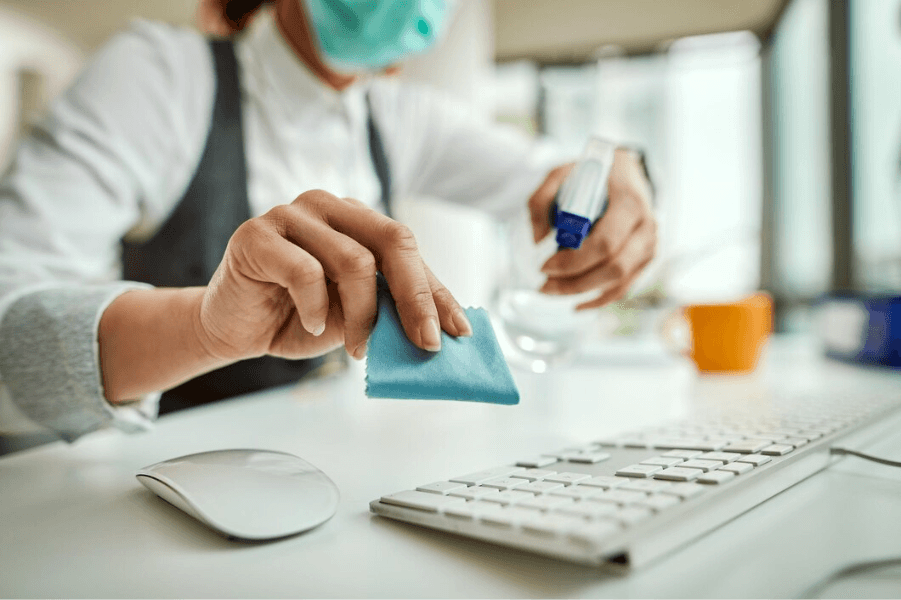
Desk sanitisation deserves particular attention because desks are where staff spend most of their working hours. Keyboards, mice, phones and desk surfaces can carry more bacteria than many people expect, especially in shared or hot desking environments.
A few practical habits support better workplace hygiene around desks:
None of these habits require significant time or cost, but together they support a noticeably cleaner and healthier workplace.
A cleaning schedule only works if it is realistic and matches how the office is actually used. Businesses should consider staff numbers, foot traffic, the presence of a kitchen or bathroom facilities, and any specific compliance requirements tied to their industry.
Many businesses across Gold Coast choose to combine internal daily habits, such as wiping down desks and emptying bins, with a professional cleaning service for the more thorough weekly and monthly tasks. This combination keeps the office presentable day to day while ensuring deeper cleaning work is handled consistently and correctly.
Compliance is another factor businesses need to weigh when setting up a cleaning routine. Under work health and safety obligations, employers are generally expected to provide a clean and safe working environment, which includes maintaining adequate hygiene standards, functioning amenities, and appropriate waste management.
Industries such as healthcare, food service and childcare may have additional cleaning and sanitisation requirements set by relevant regulatory bodies. Even outside these sectors, keeping clear records of cleaning schedules and tasks completed can be useful during workplace inspections or audits, and demonstrates that hygiene has been treated as an ongoing responsibility rather than an afterthought.
Businesses that engage external cleaning providers may also want to confirm that the provider carries appropriate insurance and follows safe handling practices for cleaning chemicals, since this can form part of a broader risk management approach.
How often should an office be professionally cleaned?
This depends on the size of the office and how many people use the space. Many offices benefit from daily cleaning of high-traffic areas, with a more thorough clean scheduled weekly or fortnightly.
What areas of an office need the most attention?
Desks, kitchen areas, bathrooms and high-touch surfaces such as door handles and shared equipment tend to need the most regular attention, since these are used most often throughout the day.
Is desk sanitisation necessary if staff clean their own desks?
Yes. Personal wiping down of a desk is helpful, but it does not always cover keyboards, phones or shared equipment thoroughly. A consistent sanitisation routine covers these gaps.
Do small offices need a formal cleaning checklist?
A checklist is useful regardless of office size. Even a small workplace benefits from a clear routine, since it helps avoid tasks being missed or duplicated.
Can office cleaning support workplace compliance?
Maintaining a documented cleaning schedule can support general work health and safety obligations and shows that hygiene standards are being actively managed rather than left to chance.
A well-planned office cleaning checklist keeps a workplace tidy, hygienic and functional without placing unnecessary pressure on staff. Daily habits, a clear weekly and monthly schedule, and attention to desk sanitisation all play a part in maintaining a healthier office. For businesses that would rather leave the detailed work to professionals, Rob's Cleaning offers commercial cleaning services designed around the needs of local workplaces. To discuss a cleaning schedule suited to your office, contact us and we can help put a practical plan in place.
I’ve tried many house cleaning services in the Gold Coast, but Rob's Cleaning is by far the best. Friendly, reliable, and spotless every time!

The bond cleaning team helped me get my full deposit back. Excellent service and affordable house cleaning prices.
I searched for house cleaning near me and found Rob's Cleaning. Now I use them every fortnight! Highly recommend.
Their cleaners are so professional and friendly. I love coming home after they’ve been—it feels like a brand-new house!
We use Rob's Cleaning for our office, and their commercial service is top-notch. Always punctual and thorough.